 U.S.A.PremiumLesta
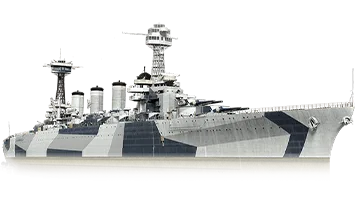
Constitution
WoWS World of Warships U.S.A. Cruiser · Tier VIII
- Main Battery
- 305 mm/50 Mk.7 in a turret
- 4 turrets × 2 barrels
- Range 18.3 km
- Secondaries
- 152 mm/53 Mk.13 in casemate mount
- Secondaries
- 127 mm/25 Mk.13 on a Mk.27 mount
- Range 7.5 km
- Torpedoes
- 533 mm Single
- 4 launchers × 1 tubes
- Range 8.5 km
Specifications
Survivability
Main Battery
 HE Shell
 AP Shell
Torpedoes
 Mk15 mod. 0
Secondary Battery

AA Defense
Maneuverability
Concealment
Consumables

Extinguishes fires, removes instances of flooding, and repairs damaged modules. Prevents enemy acoustic torpedoes from homing.

Partially restores the ship's HP by repairing any light damage.
Extends main battery firing range.

Follow the ship and automatically attack enemy aircraft. Can attack Airstrike squadrons multiple times before returning to the ship. Cannot spot enemy ships.

Carries out aerial bombardment of the marked area with depth charges. Depth charges can hit enemy submarines. They also have chances of causing fire, flooding, and incapacitating modules. Increased chances of incapacitating sonar. Effective against enemy mines. Cannot spot enemy ships.
Ballistics
Armor Model
Overview
In the mid-1910s, the U.S. Navy leadership considered a fleet enhancement program that included the construction of so-called scout cruisers. It was assumed that such ships would be fast and lightly armored or completely unarmored. One variant of such a ship was the battle scout—essentially a battlecruiser but with only cruiser armor. In the fall of 1915, at least five draft designs of such a "battle scout" with displacements ranging from 28,000 to 32,000 tons were proposed. The ship would have a 127 mm armor belt and eight main battery guns. A distinctive feature of these designs was an elongated flush-deck hull with pronounced sheer, causing the stern to drop by one deck height. The project was not realized, and further refinements led to the creation of the Lexington-class battlecruisers.
Modules


Upgrades
Slot 1
Torpedo Tubes Modification 1
Main & Intermediate Battery Modification 1
Weapon Survivability System

Damage Control Party Modification 1
Spotting Aircraft Modification 1
Slot 2
Engine Room Protection
Damage Control System Modification 1
Slot 3
Torpedo Tubes Modification 2
Aiming Systems Modification 1
Secondary Battery Modification 1
Main & Intermediate Battery Modification 2
Slot 4

Bomb Stabilizer
Steering Gears Modification 1
Propulsion Modification 1
Damage Control System Modification 2
Slot 5
Ship Consumables Modification 1
Steering Gears Modification 2
Concealment System Modification 1