 U.K.PremiumUncommonGlobal
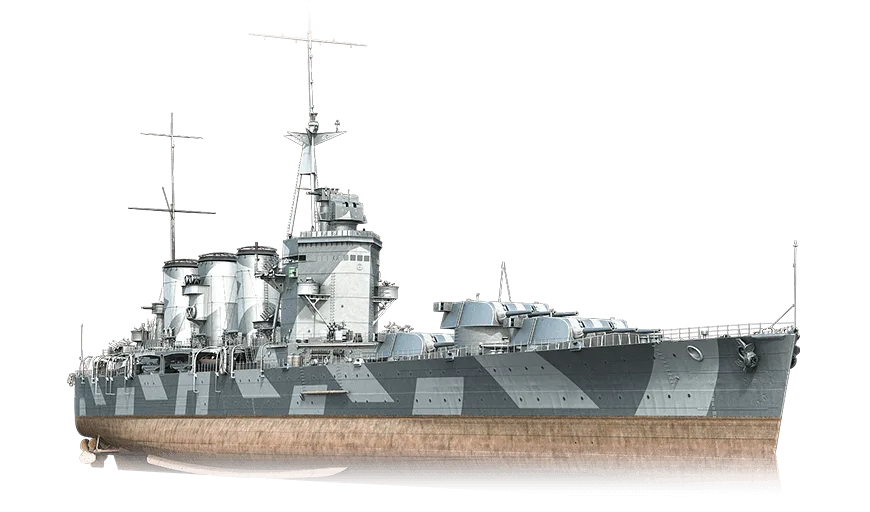
Nottingham
WoWS World of Warships U.K. Cruiser · Tier VIII
- Main Battery
- 203 mm/50 BL Mk.VIII on a Mk.III mount
- 3 turrets × 3 barrels
- Range 15.7 km
- Secondaries
- 102 mm HE 35 lb
- Range 6.6 km
- Torpedoes
- 533 mm QR Mk IV
- 4 launchers × 4 tubes
- Range 8 km
Specifications
Nottingham Win Rate & Combat Stats
Sample of 495.2K players · as of 2026-10-15Averages from our own crawled player sample, not official server-wide data. The sample skews toward active clan players, so its overall win rate runs about 1 point above the true server average. Battle counts are career totals and include games played before this ship’s past balance changes.
Survivability
Main Battery
 AP Shell
 HE Shell
Torpedoes
 533 mm Mk VII
Secondary Battery

AA Defense
Maneuverability
Concealment
Consumables

Extinguishes fires, removes instances of flooding, and repairs damaged modules. Prevents enemy acoustic torpedoes from homing.

Partially restores the ship's HP by repairing any light damage.

Generates a smoke screen that reduces the risk of being detected by the enemy.

Increases the range of assured acquisition of enemy ships and torpedoes, including those within smoke screens.

Temporarily boosts the performance of secondary, torpedo, and airstrike armaments.

Carries out aerial bombardment of the marked area with depth charges. Depth charges can hit enemy submarines. They also have chances of causing fire, flooding, and incapacitating modules. Increased chances of incapacitating sonar. Effective against enemy mines. Cannot spot enemy ships.
Nottingham Change History
- Detectability range by sea increased: 11.2 to 11.7 km. Accordingly, other types of detectability were increased.
- Nerfdetectability range by air6.4 → 7.6 km
- Nerfmaximum he shell damage3,300 → 2,850
- Nerfchance to set fire17 → 15 %
Ballistics
Armor Model
Overview
After signing the Washington Naval Treaty, Great Britain immediately got down to the task of designing cruisers. One of the great enthusiasts for the development of a new cruiser class was Sir George Thurston, who designed such ships as Kongō and Erin. Back in 1923, he published an essay that described the general features of cruisers of the future. In 1926, he presented three cruiser projects to the Royal Navy—projects A and B resembled the County-class cruisers, while project C turned out to be more radical. It envisaged the arrangement of main battery turrets at the bow to achieve a better concentration of fire. The Admiralty, however, assumed a more conservative approach than Thurston, and the project was left without consideration.
Modules

203 mm/50 BL Mk.VIII on a Mk.III mount
Main Battery

533 mm Mk VII
Torpedoes

Nottingham
Hull

Propulsion: 90,000 hp
Engine

Mk VIII mod. 1
Fire Control
Upgrades
Slot 1

Auxiliary Armaments Modification 1

Main Armaments Modification 1

Damage Control Party Modification 1
Slot 2

Engine Room Protection

Damage Control System Modification 1

Hydroacoustic Search Modification 1
Slot 3

Torpedo Tubes Modification 1

Aiming Systems Modification 1

AA Guns Modification 1

Secondary Battery Modification 1

Main Battery Modification 2

Smoke Generator Modification 1
Slot 4

Airstrike Modification 1

Steering Gears Modification 1

Propulsion Modification 1

Damage Control System Modification 2
Slot 5

Ship Consumables Modification 1

Steering Gears Modification 2

Concealment System Modification 1
