
 U.S.A.EliteCommonGlobal
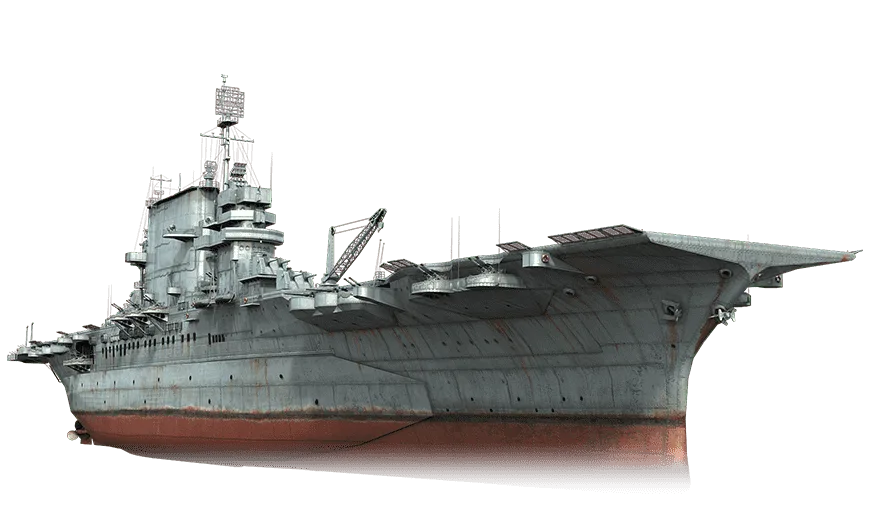
Lexington
WoWS World of Warships U.S.A. Aircraft Carrier · Tier VIII
- Secondaries
- 127 mm HE Mk32
- Secondaries
- 127 mm HE Mk32
- Range 4.5 km
Specifications
Lexington Win Rate & Combat Stats
Sample of 495.2K players · as of 2026-10-15Averages from our own crawled player sample, not official server-wide data. The sample skews toward active clan players, so its overall win rate runs about 1 point above the true server average. Battle counts are career totals and include games played before this ship’s past balance changes.
Survivability
Secondary Battery
AA Defense
Maneuverability
Concealment
Aircraft
 Dive Bomber (A)
 Fighter (A)
 Torpedo Bomber (A)
Consumables

Extinguishes fires, removes instances of flooding, and repairs damaged modules. Prevents enemy submarine-launched torpedoes from homing.

Follow the ship and automatically attack enemy aircraft. Can attack Airstrike squadrons multiple times before returning to the ship. Invulnerable against hostile fighters, do not attack them, and cannot spot enemy ships.

Carries out aerial bombardment of the marked area with depth charges. Depth charges can hit enemy submarines. They also have chances of causing fire, flooding, and incapacitating modules. Increased chances of incapacitating sonar. Effective against enemy mines. Cannot spot enemy ships.
Lexington Change History
Torpedo bomber squadron parameters changed
- Buffstock aircraft preparation time86 → 78 s
- Buffresearchable aircraft preparation time80 → 72 s
Dive bomber squadron parameters changed
- Buffstock aircraft preparation time81 → 73 s
- Buffresearchable aircraft preparation time76 → 69 s
Attack aircraft squadron parameters changed
- Buffstock aircraft preparation time69 → 62 s
- Buffresearchable aircraft preparation time66 → 60 s
Armor Model
Overview
Following the Washington Naval Conference, a decision was made to convert two Lexington-class battlecruisers into aircraft carriers. These ships exerted a substantial influence on future aircraft carrier design; the flight deck and outer sides of the hangar were integrated into the hull, providing longitudinal strength to the entire ship. Such a design allowed for a fully enclosed hangar space. At the time when the Japanese forces attacked Pearl Harbor, USS Lexington was in the process of transferring planes to Midway. During the Battle of the Coral Sea, USS Lexington sustained several bomb hits. Eventually, the decision was taken to scuttle the ship, and destroyer USS Phelps was tasked with sinking Lexington using torpedoes.
Modules

Lexington (A)
Hull
Lexington (B)
Hull

Propulsion: 180,000 hp
Engine

F6F Hellcat
Fighter
F4U-1D Corsair HVAR 127 mm
Fighter
F4U-1D Corsair Tiny Tim
Fighter

TBF Avenger
Torpedo Bomber
SB2C Helldiver
Torpedo Bomber

SBD Dauntless
Dive Bomber
SB2C Helldiver
Dive Bomber
Upgrades
Slot 1

Auxiliary Armaments Modification 1

Air Groups Modification 1

Damage Control Party Modification 1
Slot 2

Aircraft Engines Modification 1

Damage Control System Modification 1
Slot 3

Aerial Torpedoes Modification 1

Attack Aircraft Modification 1

Torpedo Bombers Modification 1

Secondary Battery Modification 1
Slot 4

Airstrike Modification 1

Bombers Modification 1

Torpedo Bombers Modification 2

Attack Aircraft Modification 2

Damage Control System Modification 2
Slot 5

Squadron Consumables Modification 1

Concealment System Modification 1
